How We Replaced Rented Tour Headsets With a Mobile App
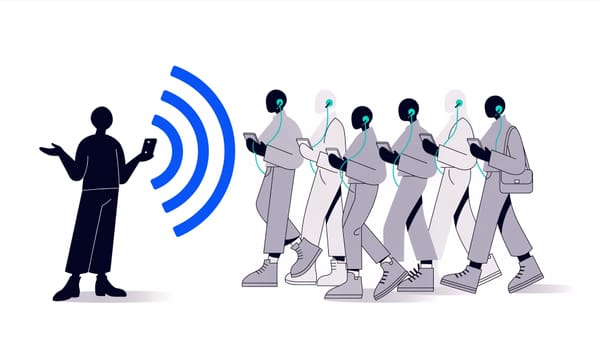
Rented whisper radio sets cost money on every departure, travel in a case, and pass from ear to ear. Here is how Your Next Tours replaces them with the phones the group already carries.
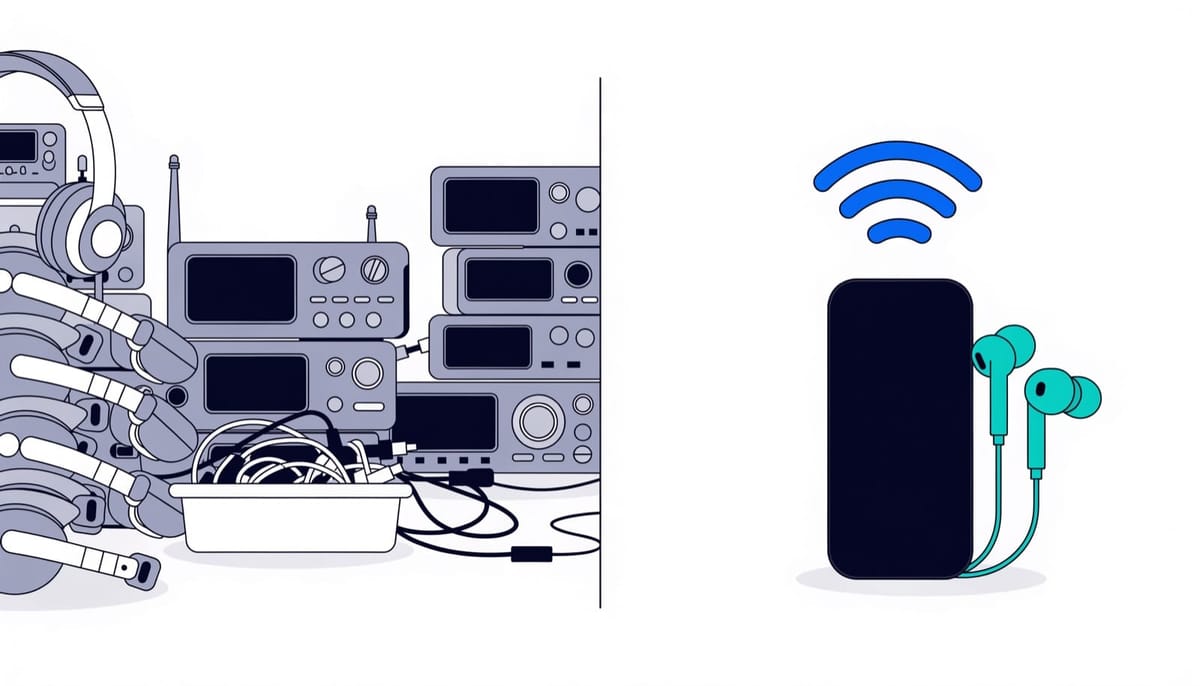
Every guided tour used to start the same way: a case of rented receivers, a pile of headsets, and ten minutes of handing them out before anyone heard a word about the city.
Your Next Tours removes that ritual. The guide's own phone becomes the audio system, and the group listens on the phones already in their pockets. Here is why we built it that way, starting from what is actually wrong with the rented sets.
Three problems with rented tour guide sets
They cost money on every single tour. Whisper radio sets are rented per person, per departure. On our own cost calculator, when a guide does not enter their own figure, we assume a typical market rate of about 4 USD or EUR per guest per tour (roughly 3.5 GBP at London rates, roughly 100 TL in Turkiye). Run a group of 25 a few times a week and equipment quietly becomes one of the biggest recurring line items in a small tour business. The device count also caps the group: you can only sell as many seats as you have receivers.
They travel in a case. Someone has to carry the transmitter, the receivers, the headsets, the chargers and a few spares to the meeting point. Hand them out, count them. Collect them, count them again. Charge them overnight, replace the ones that walked away. None of this appears in the brochure, but all of it appears at 7am.
They pass from ear to ear. The headset the morning group wore goes to the afternoon group. Wiping down a pile of earpieces between tours takes time, and it is done to a standard nobody can verify. Guests notice.
What we built instead
Before the description, here is the difference, recorded on a real walking tour in Ankara. The first half is the guide's voice as the group actually hears it on a busy street. The second half is the same guide, same street, heard through Your Next Tours. Turn the sound on.
Traffic, a bus, twenty other conversations, and then the same voice in your own earbuds.
The guide opens the app, picks the tour and starts talking. The phone itself becomes the broadcast server: it serves the listening page and streams the live audio to everyone connected. Guests scan the QR code the guide carries, the page opens in their browser, they type a name, and they are listening on their own earbuds. No app to install, no account, no password.
It runs in two modes.
Local network. The guide carries a small portable WiFi router that creates a network wherever the tour happens: inside a museum, underground in a cistern, in a valley with no signal. The tour audio never touches the internet, so there is no data cost and no dead zone.
Online. Where there is a connection, the broadcast goes over the internet instead: no range limit, and this is the mode where live translation runs. The guide speaks one language, each guest picks their own, and gets translated audio with live captions on screen. We are targeting 30+ languages, including the common tour languages.
In both modes the guide can push slides, photographs and maps to every screen mid-sentence, so a floor plan or an old photo of the street arrives exactly when the story needs it.
One detail that matters to operators: on the local network there is no fixed listener limit in the app. Capacity is a property of the router the guide carries, not of how many receivers somebody rented that morning.
What actually changes
Cost. The recurring per-guest rental disappears. The equipment is a phone the guide already owns plus one router, bought once.
Logistics. Nothing to reserve, hand out, collect, count, charge or replace. Setup is opening an app.
Hygiene. Everyone listens through their own earbuds. No shared earpieces between groups.
Languages. A rented channel is one channel in one language. A mixed group can follow the same guide in several at once.
And what it costs you
A fair comparison runs both ways, so here is the other side.
It depends on your guests' phones. Every participant needs a smartphone with a browser and their own earphones. Dedicated hardware makes no such assumption, and that is a real advantage in some groups.
Audio is one way. Guests cannot speak back through the system. They tap a raise-hand button, the guide sees the queue and answers out loud for everyone.
Offline mode needs the router. The phone is the server, but the local network comes from the small router in the guide's bag.
Live translation is opt-in and needs a connection. The guide switches it on deliberately. What gets streamed out for translation is the guide's own voice, never a participant's microphone, and it is not stored on our servers.
Try it on your next tour
Your Next Tours is live at yournext.tours. The guide app is on the App Store and Google Play. Your guests need nothing at all: they scan a QR code and listen.